When the image size, the image file size, the resolution of the image, and so on are large, an error like Request Too Large occurs. In this sample script, such the image can be converted to Google Document by reducing them.
Here is a workaround for converting large images to Google Docs from Kanshi Tanaike. The post includes a code snippet and link to related Stack Overflow Q&A. As noted in the SO discussion the solution might be a compromise for some developers as it reduces the image resolution being passed into Google Drive and if you need to keep the original quality you might have to look at other paid services.
While there is not way to directly duplicate Filter Views into other sheet tabs in Google Sheets we can do this with a little bit of Google Apps Script magic.
In this tutorial, we will walk through how to duplicate all filter views from a source Google Sheets tab and duplicate them into selected sheets tab.
We’ll start off with an example sheet to better understand what we are going to achieve and then share the code along with a quick-use guide for those of you who want to to just get in and use the script in your own project.
This tutorial from Scott Donald is a great opportunity to learn more about manipulating Filtered Views in Google Sheets and as a bonus you may pick up some tips on how to use the Sheets Advanced Service.
📅 A free and open source web app to make it easy for others to schedule with you –
Features
🌐 Create a unique link that others can use to book an appointment on your Google Calendar
📑 Offer mulitple types of meetings, each with their own configurable timeframe and event settings
📒 Place events on any calendar you have edit access to
📆 Confirm availability against multiple calendars
🤖 Intelligent suggestion of available free times on both your and (if accessible) the scheduling party’s calendar
🔗 URL parameters to bring the user to a specific meeting type and prefill their email1
⚡ Send a webhook push to integrate with IFTTT, Zapier, and more when an event is scheduled
🌈 Configurable accent color
🌙 Automatic light and dark mode
💳 No premium tier. 100% free.
This Apps Script solution comes thanks to a tweet from Sourabh Choraria (@choraria) highlighting a open source project from Leo Herzog which lets to deploy a highly customisable Google Calendar appointment scheduling app. The solution uses a nice JavaScript library for handling dates/times which you might find useful to include in your own projects called Luxon.
This is a sample script for clearing the discrete cell values on multiple sheets using Google Apps Script.
Handy little code pattern for clearing ranges across multiple tabs in Google Sheets. Snippets are provided for both SpreadsheetApp and the advanced Sheets service.
When working in a team and/or with a client, you want to have multiple environments. At minimum, you probably want a dev environment (or multiple ones) in which you are working, and a test environment in which the client or your team can run acceptance tests before production. Of course, they must both be separate from the production environment. To push your code to the correct environment, you need to either update the .clasp.json file manually or keep multiple copies of your script with different .clasp.json files. Fortunately, things have just become significantly easier, as I recently built an app for this purpose called clasp-env, which is available on NPM. See the source link for details.
Convert selected range into PNG image and save it to Drive
In this post from Max Makhrov you can discover how you can convert a selected Google Sheets range to an image. With options to embed charts and tables in Google Docs and Slides you might be asking why you would want to do this. Max highlights a couple of great reasons:
You need to create a screenshot and use it later: send it to Telegram or email, or use it in Slides.
You want to create an image of cells as you see them on screen, containing images, charts, sparklines, etc.
You want to create a screenshot of a range that does not fit your screen.
You want to create a screenshot of a range with high resolution.
There are some limitations with this approach which are outlined in the post and if you have any solutions there is a link to contribute to the GitHub repo.
Learn how to track link clicks using Google Sheets and Apps Script to create a simple, lightweight tracking system
You live and learn! This is a regular occurrence if you are a subscriber to the work of Ben Collins (benlcollins.com). No exception with this recent post highlighting the ping attribute which can be used in <a> HTML links. This attribute has been around for a long time, but I’m sure many people like have never come across it. In the source post from Ben you can learn how to setup an Apps Script web app which will let you record link clicks in a Google Sheet.
A note of caution is whilst ping is valid HTML not all browsers choose to use it or enable it by default, something Mozilla have decided to do in Firefox. You can head over to Mozilla mdn documentation for the browser compatibility table and here is also an interesting post on how Google tracks with the ping-attribute.
Preview tweets and user data when sharing links, along with the ability to follow a specific user or like a particular tweet.
If you haven’t looked at Google Chat apps or not looked at Chat apps for a while this is a great post from Sourabh Choraria outlining the development process using Google Apps Script. As part of this Sourabh includes an overview and source code for a Twitter powered Chat app recently published and available to try out in your Google Workspace domain. The app showcases slash commands as well as a recent new feature of preview links.
This is a sample script for retrieving the values of dropdown list of the smart chips on Google Document using Google Apps Script.
At August 23, 2021, 3 Classes for retrieving the smart chips have been added to Google Apps Script. But, in the current stage, unfortunately, all values of the smart chips cannot be retrieved by the Classes. For example, the dropdown list of the smart chips cannot be retrieved
Incredibly useful report and workaround from Kanshi Tanaike for Google Workspace Devs needing to get some ‘smart chips’ values from Google Docs. Hopefully classes/methods will be added to Apps Script and the Google Docs API (here is a related feature request you can star in the issue tracker), particularly as the current solution is to convert the Google Doc to .docx and then back to Google Doc.
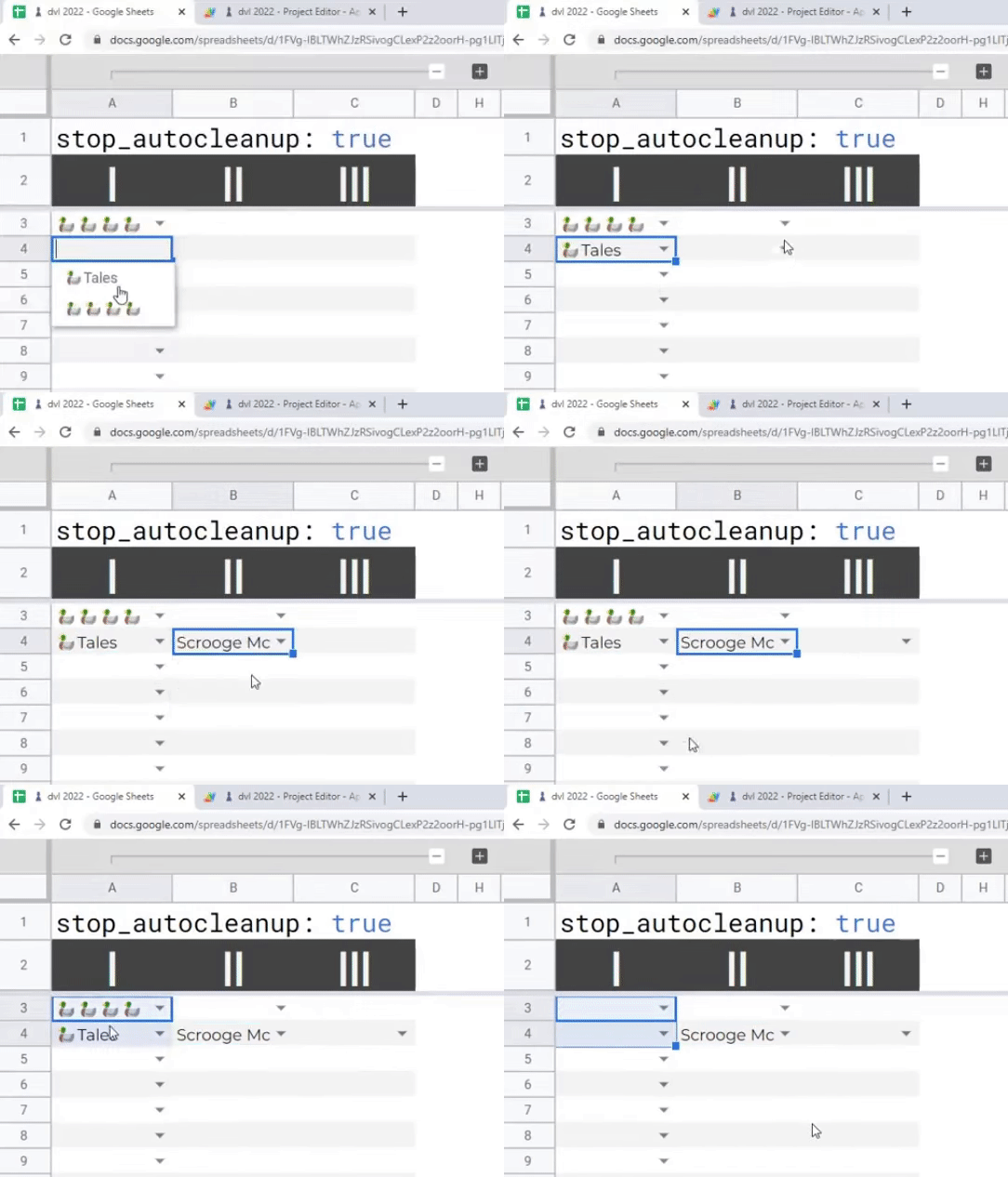
Updated the script for dependent lists, and now it supports new options. New for 2022:
Dependent drop-down lists can be used to create a dynamic list of choices in Google Sheets. When the user makes a selection from the first drop-down list, the choices in the second drop-down list will be updated based on the selection. This can be used to create a cascading list of choices.
If you are looking for a nice solution to build dependent drop-down lists in Google Sheets this is a great solution from Max Makhrov. For more experienced Google Apps Script developers the solution incorporates some clever snippets both from Max and a number of other members of the community. Some highlights include: converting a column index into corresponding column letter; a tasker to batch apply updates to a Google Sheet; ChuckyCache for objects above 100Kb; and a reference to a zip compression solution. All these are referenced in the source code provided in the post.