How to fix Apps Script file loading order and defintion visibility problems with an Exports object.
It’s good practice to keep class and namespace definitions in separate files and avoid defining functions or variables in the global space. However, App Script doesn’t give you control over the order in which it loads files. If you reference a class or a namespace from one script file, it may not yet be defined. This is where an Exports object comes in.
As your script projects get larger and you start splitting out across script files you may find you need a little more structure. Class and namespace definitions are a good way to structure your code. Even when you do this you can still encounter problems with parts of your script trying to run before they are fully loaded.
This was a particular issue when the V8 runtime launched in 2020. This was fixed in June 2022, but it can still be an issue depending on how declarations are made in your code. To find out more about why this happens and how to fix it this post by Bruce Mcpherson shows how an Exports object can be used to structure your code.
Many developers want to offer specific, additional functionality for specific users. One very common scenario is to differenciate in users that pay for this functionality.
When you deliver an add-on, you want to know whether this user has this special access. We know this as a license.
In this blog, I will show you how we can let the add-on know what the user’s license is. We are going to do this by giving the user a key, where they can ‘unlock’ functionality by pasting this in their add-on.
Here’s an elegant solution from Riël Notermans (Zzapps) for letting users unlock premium functionality in your Workspace Add-on without relying on an external fetch or database by using an encrypted JWT web token.
You can include various data in the token and this example a subscription email and expiry is included which can be checked locally, for example, comparing the email from Session.getActiveUser().getEmail().
In Google Apps Script, there is the Web Apps. When Web Apps is used, the users can execute Google Apps Script using HTML and Javascript. This can be applied to various applications. When the Web Apps is deployed with “Anyone”, anyone can access the Web Apps. And, there is the case that Web Apps deployed with “Anyone” is required to be used. Under this condition, when 2 Factor Authentication (2FA) can be implemented, it is considered that the security can be higher and it leads to giving various directions for the applications using Web Apps. In this report, I would like to introduce the method for implementing the pseud 2FA for Web Apps deployed with “Anyone” using Google Apps Script.
There can be scenarios where you’d like to publish an Apps Script web app with ‘anyone can access’, but still provide a level of security. Here’s a nice example from Kanshi Tanaike where they use MailApp to email the user a a time limited random passcode.
Magic links and passwordless login are used by a number of services, including Slack, and rather than including a password, as demonstrated in this example, it wouldn’t take much to turn this solution into a passwordless app. There are risks associated with email based authentication and if an attacker already has access to your email so other solutions are worth considering depending on the sensitivity of your web app.
Working around the 100-widget limit in Card Services, used when building Workspace Add-ons.
Like it says on the tin a way to display more than 100 items in a Google Workspace Add-on. The solution also has a nice UX friendly search feature to make it easier to find stuff in the UI. The source post from Sourabh Choraria includes additional information and links to the code on GitHub.
Have you ever wanted to convert currencies instantly while in Google Chat with colleagues and clients? In this tutorial, we are going to build a Currency Converter Google Chat App with Google Apps Script to do just that.
This tutorial is a multi-media series containing step-by-step video instructions for each stage of the process along with code snippets for each stage, important links and some further details on the more unusual parts of the code.
This is a great video series wrapped in a blog post, which highlights a Google Chat app development process. The particular project presented by Scott Donald is a currency converter but there are many repeatable aspects that would work in a wide range of Google Chat applications. The project is coded in Google Apps Script and the post includes plenty of snippets to help you understand various aspects of Google Chat app development including slash commands and information cards.
If you are a Google Workspace and Trello power user like me, I’m sure the thought has come across your mind of connecting your Google Apps to Trello, but every time you search for a solution you get an ad for Zapier or IFTTT. I try to avoid these solutions because they are great at making an initial connection, but if you ever want to do anything advanced, it will require you to sign up for a premium subscription. After searching and not finding answers, I decided just to try and build it for myself.
If you are a beginner to Google Apps Script this is a nice tutorial if you are interested in learning about connecting with other services, in this case Trello. Hopefully this post also illustrates that coding aspect of connecting with other services using Google Apps Script can be straightforward once access had been setup on the third party site.
In this post, we’re going to look at a script to be able to make even teams from a selection of players. I play football every Sunday and every week my friends sign up to play and most weeks there are different players playing, so we end up having to make the teams, and trying to do it as fairly as we can, which inevitably takes some time.
Nice ‘weekend project’ from Baz Roberts highlighting how Google Apps Script can be used to do a weighted random shuffle of data. The post includes a line-by-line explanation of what the script is doing and a great resource if you are at the beginning of your Apps Script journey.
Google Drive alone can handle small file management jobs, but for larger batches of files, it can be too much for a simple Drive script to manage. With Google Apps Script, even large batches can be executed within 6 minutes, offering businesses the monetary and time benefits of efficient file management. This report looks at how Google Apps Script improves file management with batch requests, judging its efficacy by measuring the benchmark.
We’ve regularly highlighted work from Kanshi Tanaike in Pulse and it’s nice to see it also being highlighted in the official Google Cloud Blog. I’m sure many Google Workspace developers, like me, have encountered issues with managing large volumes of Google Drive files. In the post Kanshi Tanaike highlights how batch methods can be used to greatly speed up the process when interacting with the Google Drive API.
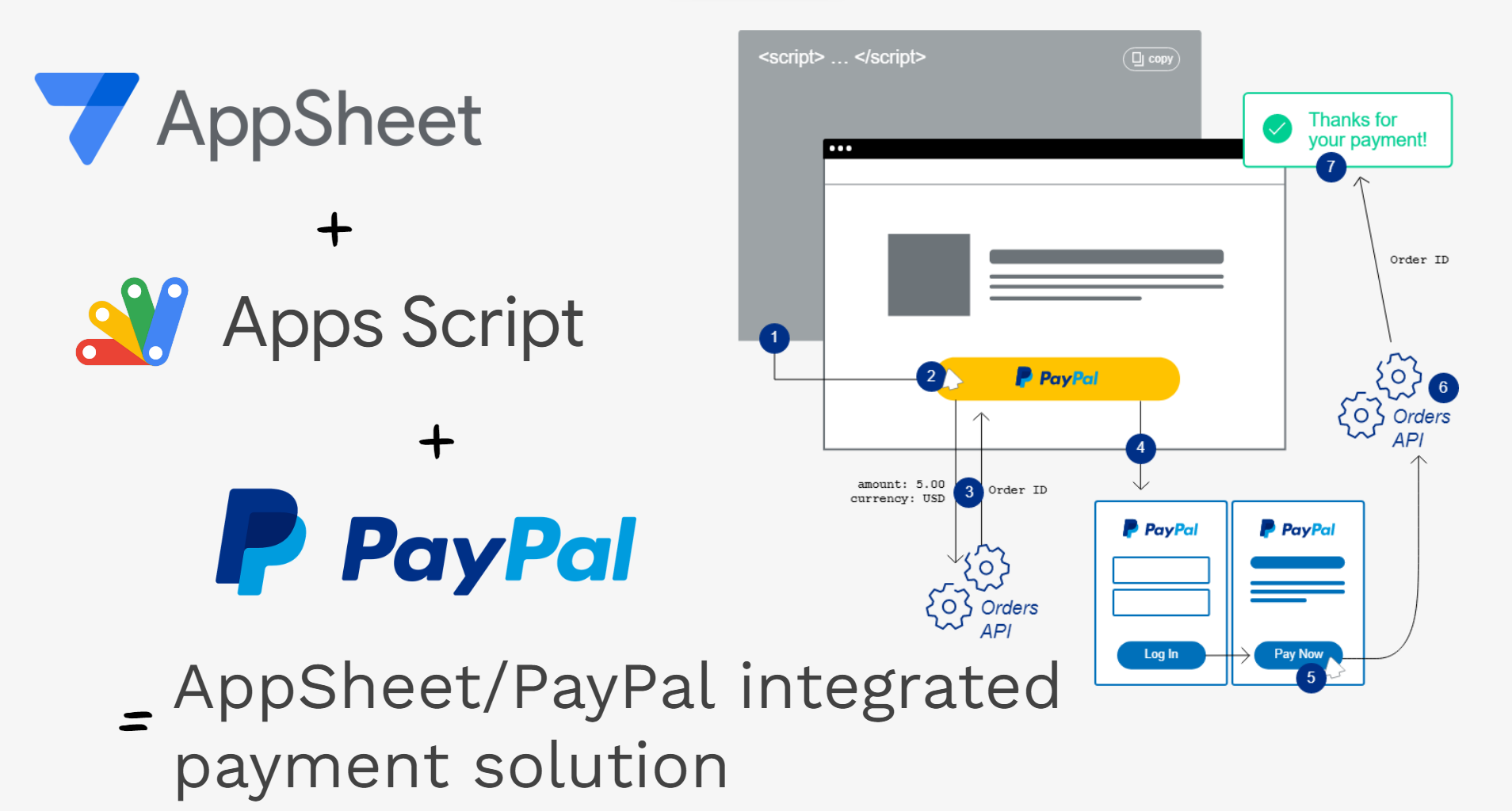
In this post I’ll provide an overview of how PayPal was integrated into AppSheet with the help of Google Apps Script. Even if you are not interested in payment integrations this post also hopefully pulls together useful tips, best practices and code patterns for reading/writing data to Google Sheets.
Hopefully this post illustrates not only just a method for integrating a PayPal payment processor into an AppSheet app, but also a method which can generally be used to extend AppSheet functionality with Google Apps Script powered Web Apps.
As a bonus you also get some of my top tips for interacting with data in Google Sheets including efficiently reading/writing data for multiple users without concurrent overwrites.
The library lets you send emails, using MailApp, GmailApp, and Gmail API. The library takes care of parameters, so you do not need to care about which method to use. I had trouble with my project when I wanted to automatically send emails and suddenly for me we’ve reached the daily limit. This is why I’ve decided to make some research and be sure fewer bad things happen in the future.
If you are looking for a deep dive into Google Apps Script powered email sending options you are at the door of enlightenment. In this post from Max Makrov you not only to get an explanation of the options and benefits for sending email with MailApp, GmailApp and the Gmail API, but also a handy library, MmailApp. which makes it easy to switch between all three.