Learn how to setup a video meeting inside Google Meet with the Google Calendar API and Apps Script. This Apps Script sample shows how you can programmatically schedule video meetings inside Google Meet with one or more participants using the Google Calendar API. It can be useful for teachers who wish to schedule regular meetings with their students but instead of manually creating meeting invites, they can easily automate the whole process for the entire class.
We’ve featured a couple of Google Meet scheduling solutions in Pulse[1,2]. This latest example from Amit Agarwal includes some nice code examples for additional optional parameters that can be used when using Google Calendar as an Advanced Service (Calendar.Events.insert). These include:
attendees[].responseStatus – for setting the attendee’s response status;
reminders.overrides[] – to override default event reminders and pops; and
recurrence[] – creating a custom recurrence for the calendar event
Amit includes some very useful examples of recurrence rules, using the RRULE notation. As well as RRULE the recurrence property can also accept RDATE and EXDATE values for further occurrence customisation.
You use Google Sheets as your own Podcast Manager that will automatically download your favorite podcasts to Google Drive and instantly sync across all your devices.
Amit Agarwal is always coming up with creative uses for Google Apps Script. His latest project is a great example of what can be achieved with a little code and a lot of know-how. Even if you aren’t a podcast fan this project is worth checking out as Amit is expert at writing concise and efficient code.
Some highlights to check out once you make a copy of the ‘Podcast Manager’ Google Sheet are use of CacheService for getting/putting a last update time and using the .filter(Boolean) trick for ignoring blank cells when using .getValues() on Google Sheets data. There is plenty more going on and worth spending some time using the Script Editor debugger and breakpoints to learn from a master.
This tutorial explains how you can parse and extract text elements from invoices, expense receipts and other PDF documents with the help of Apps Script.
We’ve previously featured a method for extracting text from a PDF from Scott Donald. This latest post from Amit Agarwal uses a similar technique of sending a PDF document to Google Drive API to convert to a text file and then using RegEx to extract the content you need. Given the number of PDF documents flying around between organisations both of these posts from Amit and Scott are worth being aware of for potential future projects.
Learn about the different approaches that will help insert images in Google Sheets and understand the reason why you may prefer one approach over the other.
In this tutorial Amit Agarwal covers the various ways you can insert images into Google Sheets, including with Google Apps Script. As part of this you can learn about the CellImage and CellImageBuilder which are relatively new features for adding an image to a Google Sheets cell. There are some useful code snippets included in the tutorial that can be dropped into your own projects.
These code samples show how you can use Google Apps Script to manage and search through the content of shared drives in Google Drive using the Drive API.
Some handy Google Apps Script snippets from Amit Agarwal for interacting with Shared Drives. The post includes solutions for:
Learn how to easy import transactions from PayPal into Google Sheets with Google Apps Script. You can import standard transactions, recurring subscriptions and donations.
Even if you aren’t interested in PayPal this post is well worth looking at as the author, Amit Agarwal, is a master when it comes to handling data with Google Apps Script and there is a general patterns of ‘get data from an API, write it to a Google Sheet’ that might be useful for your own projects.
Amit Agarwal has recently been busy continuing to publish lots of incredibly useful Google Apps Script tips and snippets on his ‘Digital Inspiration’ blog. Three recent posts might be of particular interest to Google Workspace administrators:
[This Google Apps] Scripts gets the name and email address of users in the organization and saves the list inside a Google Spreadsheet. This script can only be executed by the domain administrator.
Learn how the Google Workspace admin can change the Google account passwords of multiple users in their organization automatically with Google Apps Script.
Generate dynamic Open Graph images for your website with Google Sheets without requiring Puppeteer. All pages on your website can have their own unique Open Graph images created from a Google Slides template.
As explained by Amit Agarwal Open Graph images are included as a feature image on social media sites when the link is shared. You can use static images but some sites like Github dynamically create an image that includes additional information.
For example, if you were to share the link to the Google Workspace Solutions Github repo on Twitter an image is automictically displayed containing information like the number of contributors, issues, stars and forks:
To generate these images often a headless browser solution like Puppeteer is used. In this example from Amit he shows how a Google Slides template and a little Google Apps Script can be used to batch create similar open graph images.
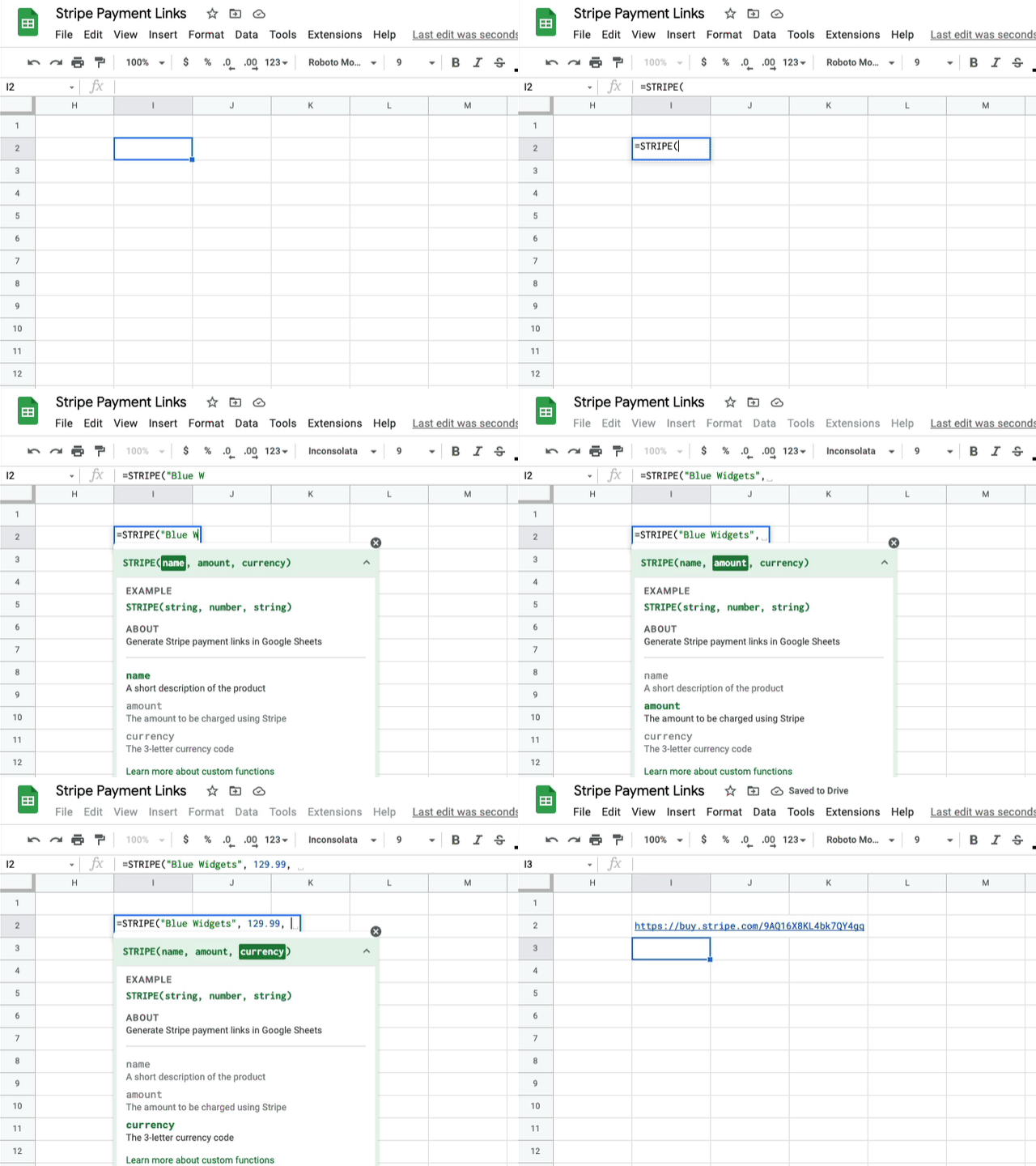
How to use Google Sheets to generate Stripe payment links and request payments in any currency from your customers anywhere in the world!
Amit Agarwal continues an excellent series of payment themed posts with this latest contribution on integrating the new Stripe Payment Links API with Google Sheets. As noted by Amit this can be combined to make quick payment workflows. Click through for more details and the source code.
ThinkAmI uses the XMLService of Google Apps Script to create a valid RSS feed that is served to the browser using ContentService with the MIME type set as RSS.
Recently I was looking for a Google Apps Script snippet to create a RSS data feed. Back in the day Apps Script used to have a Xml.parseJS() method which could make a data feed from a JavaScript array. It was announced that the old XML service would be replaced by XmlService in 2013 so we are not talking breaking news here.
The RSS helper script created by ThinkAml and shared by Amit Agarwal makes it a lot easier to generate a feed in a couple of lines of code. To let you see I’ve included a snippet and click through to the source post for the full code:
    var rss = makeRss();

    rss.setTitle('RSS 2.0 Feed with Google Apps Script');
    rss.setLink('http://example.com');
    rss.setDescription('RSS 2.0 Feed');
    rss.setLanguage('en');
    rss.setAtomlink('http://example.com/rss');

    for (var i = 1; i < 3; i++) {
        rss.addItem({
            title: 'TITLE:' + i,
            link: 'http://example.com/#' + i,
            description: 'DESCRIPTION: ' + i,
            pubDate: new Date()
        })
    }